


Last Updated: October 25, 2026
Quick Summary
The best beard oil for dry skin leads with lightweight carrier oils like jojoba, argan, sweet almond, and grape seed that absorb into the skin instead of sitting on top, and it discloses its scent sources rather than hiding them behind "fragrance." Apply it to clean, slightly damp skin with your fingertips, working upward against the grain for the first thirty seconds before coating the hair.
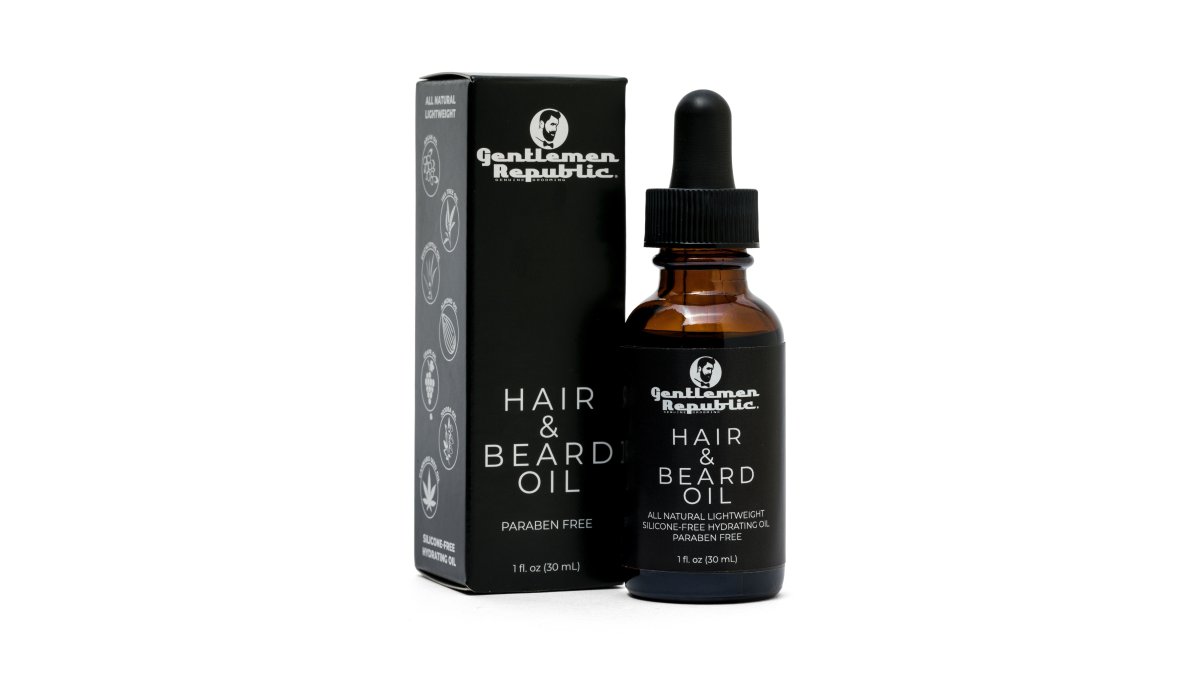
- Our Hair & Beard Oil is $18.00 for 1 oz, or $18.00 per ounce.
- For a short beard using three drops a day, 1 oz lasts roughly six to eight weeks.
- Use two to three drops for stubble and six to eight drops for beards past three inches.
- Use beard oil once daily for dry skin, and twice daily in winter or low humidity.
- Patch test a drop on your inner forearm and wait 24 hours before applying to your face.
Table of Contents
- Why Dry Skin Under a Beard Needs More Than a Wash
- The Best Beard Oil for Dry Skin: Comparison at a Glance
- Best Beard Oil Ingredients for Dry Skin
- Beard Oil for Dry Itchy Skin: What Calms the Itch
- How to Moisturize Skin Under a Beard
- How Often to Use Beard Oil
- Flaking That Isn't Dry Skin: When to Look Elsewhere
- Patch Test First, Then Build Your Routine
- Frequently Asked Questions
Why Dry Skin Under a Beard Needs More Than a Wash
Dry, flaking skin under a beard is a moisture-barrier problem, not a hygiene problem. Washing more often usually makes it worse, because soap strips the oils that keep the skin beneath your beard calm and supple.
Here is the core tension most guides skip. Your beard hair wicks oil away from the skin before it can do its job.
Below, we break down what to look for, how to apply it, and how much to use by beard length.
The Best Beard Oil for Dry Skin: Comparison at a Glance
The comparison below uses five criteria for every option, carrier-oil composition, fragrance disclosure, skin feel after absorption, price per ounce, and suitability for dry or reactive skin, so you can see why one product beats another instead of taking our word for it. You can view and buy the Hair & Beard Oil directly.

| Option | Price | Price per oz | Carrier oils | Fragrance | Skin feel |
|---|---|---|---|---|---|
| Hair & Beard Oil (1 oz) | $18.00 | $18.00/oz | Argan, grape seed, jojoba, almond, cannabis seed | No added fragrance; tea tree and eucalyptus oils present | Lightweight, absorbs in under a minute |
| Hair & Beard Oil + Beard Brush | $25.00 | $25.00/oz (brush included) | Same as above | Same as above | Same as above |
| Beard Care Bundle | $40.00 | Bundle pricing | Same oil plus face soap | Same as above | Same as above |
| Beard Brush (standalone) | $12.00 | n/a | n/a | n/a | n/a |
How to Read the Criteria
Carrier-oil composition. A dry-skin oil should lead with jojoba, argan, sweet almond, or grape seed, lightweight carriers that absorb rather than sit.
Skin feel after absorption. The test is simple: apply to damp skin, wait five minutes, and press a tissue to your jaw. If the tissue sticks or shines, the oil may be too heavy for daily dry-skin use. A lightweight blend leaves a faint sheen, not a film.
Price per ounce. A 1 oz bottle at $18.00 works out to $18.00 per ounce.
Suitability for dry or reactive skin. A product can be silicone-free and paraben-free and still contain drying alcohol or a strong essential-oil load that irritates compromised skin.
If you want to compare against products outside this lineup, apply the same five criteria to any bottle you pick up. The criteria matter more than the brand.
Best Beard Oil Ingredients for Dry Skin
The best beard oil ingredients for dry skin are lightweight carrier oils that mimic the skin's own sebum, plus a short ingredient list you can actually read. Heavy, waxy blends sit on top of the skin and trap flakes instead of calming them.
Carrier Oils That Actually Hold Moisture
Jojoba, argan, sweet almond, and avocado oils are the workhorses. Jojoba, argan, and almond oils are known for their conditioning properties. Avocado is a richer option for very dry, tight skin in winter.
Our Hair & Beard Oil blends argan, grape seed, jojoba, almond, tea tree, eucalyptus, and cannabis seed oils. That combination is designed for quick absorption without leaving residue.
What to Skip: Fragrance, Silicone, and Drying Alcohols
Synthetic fragrance can be a trigger for irritation in the beard area. Silicone can give a temporary shine but may seal the skin, potentially trapping flakes underneath. Drying alcohols can strip the barrier further.
Read the label and skip anything that lists fragrance, dimethicone, or alcohol denat near the top. If your skin is reactive, our guide to clean ingredient grooming products for sensitive skin covers what to look for in plain terms.
Beard Oil for Dry Itchy Skin: What Calms the Itch
Beard oil for dry itchy skin can help by restoring moisture and reducing friction between whiskers and skin.
The itch usually has two causes. First, dry skin under the beard. Second, coarse hairs curling back and poking the face.
If the itch comes with redness and small bumps, consider simplifying your routine. One oil, applied to clean, slightly damp skin, can be more effective than multiple products.
How to Moisturize Skin Under a Beard
Most men apply oil to the hair and call it done. That is the mistake. The hair gets the shine, the skin stays dry, and the flaking continues. The fix is to treat the skin as the target and the hair as the secondary beneficiary, and to scale the amount and technique to your beard length, which almost no guide does.
The Base Technique (Works at Any Length)
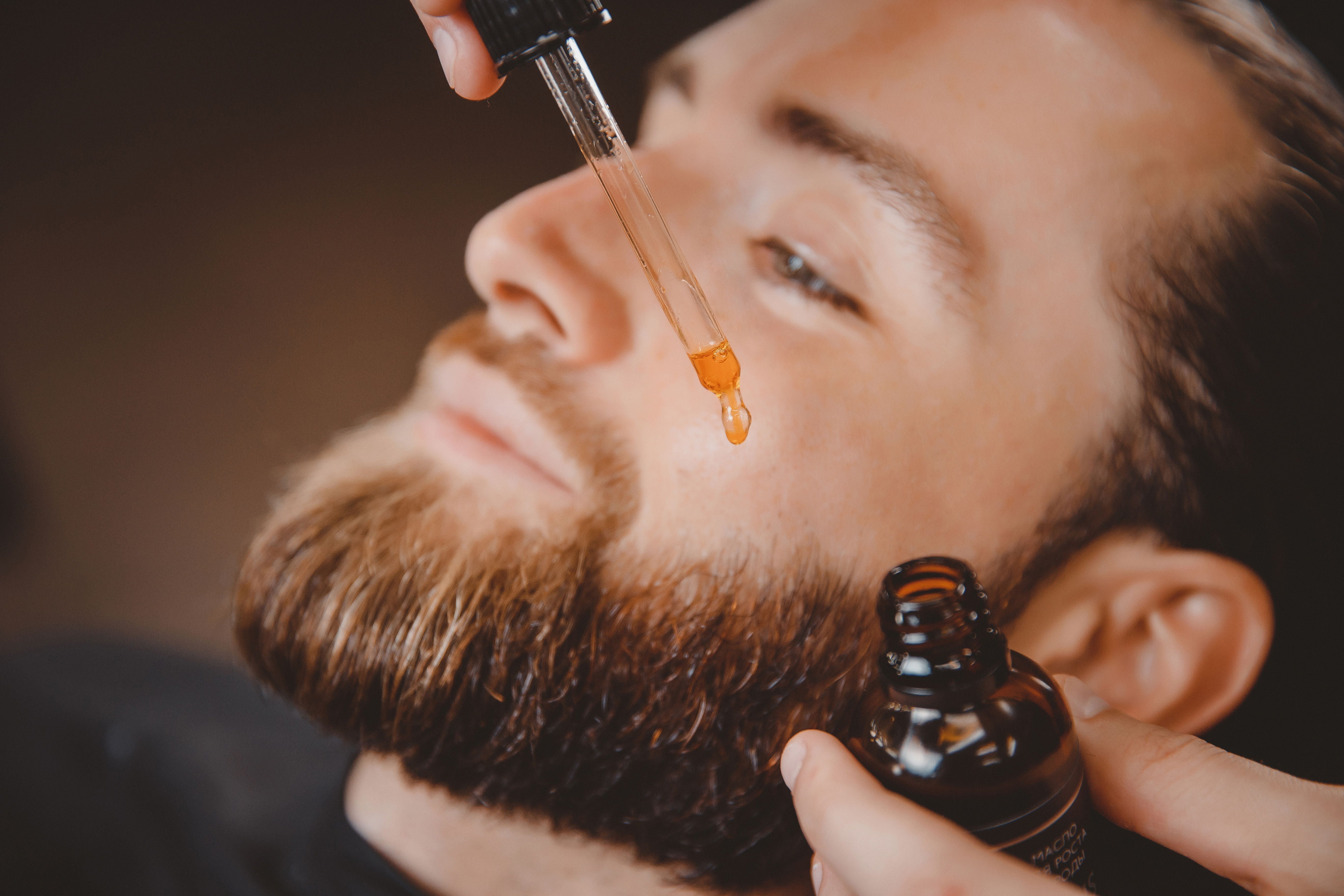
Apply oil to clean, slightly damp skin, ideally within a few minutes of a shower, while the skin is still holding water. Damp skin can absorb a lightweight carrier oil more evenly and may require less product to feel conditioned.
- Put the oil on your fingertips, not your palms. Fingertips give you control and let you feel the skin under the beard.
- Press and massage into the skin along the jawline, cheeks, and under the chin, working upward against the grain of the beard.
- Spend the first thirty seconds on skin contact only. Do not smooth oil over the surface yet.
- Once the skin is covered, run your palms down the beard to coat the hair with what is left on your hands.
Scaling by Beard Length
The drop count that works for stubble may not be sufficient for a three-inch beard, potentially leaving it under-oiled at the skin and greasy at the tips. Use these starting points and adjust by season:
- Stubble to half an inch: two to three drops. Fingertips reach the skin easily; no brush needed. Focus on the jawline and the area just under the chin, where flaking shows first.
- Half an inch to one inch: three to four drops. Part the beard with your fingers in two or three sections so you are not relying on the hair to wick oil downward.
- One to three inches: four to six drops. Use a boar-bristle brush after the fingertip pass to push oil from the surface down to the skin. Brush upward from underneath first, then smooth downward to train the hairs flat.
Why the Brush Matters More Than the Bottle
For beards over an inch, a brush can be highly beneficial because it helps distribute oil through dense growth and lifts the hairs away from the skin so the product reaches the surface beneath. The oil and brush set gives you both tools in one order.

A common pattern is that men with long beards may find their oil isn't working as expected when the issue is application, they are coating the outside of the beard and not reaching the skin. If you change one thing, change where the oil lands first.
How Often to Use Beard Oil
Use beard oil once daily for dry skin, and twice daily in winter or low humidity. Start with once a day for two weeks before adding a second application, so you can tell whether the oil is helping or irritating.
Frequency should track beard length and season, not habit:
- Stubble to half an inch: once daily, two to three drops
- One to three inches: once or twice daily, four to six drops
- Three inches and beyond: twice daily, and brush it through
A beard brush makes the second application faster because it spreads oil evenly through thicker growth. Watch out: more oil is not better. Over-application is the fastest route to clogged pores and a greasy look, and it wastes product.
Flaking That Isn't Dry Skin: When to Look Elsewhere
Not all beard-area flaking is dry skin, and oil will not fix the other causes. If flakes are thick, yellow, or cling to the skin in patches, that points to seborrheic dermatitis rather than simple dryness.
Here is the practical split. Dry-skin flaking is typically fine, white, and may improve within a week or two of consistent oiling.
If oiling for two weeks makes things worse, the problem may not be simple dryness.
Patch Test First, Then Build Your Routine
Patch testing is an important step that can help prevent a bad reaction. Apply a drop of oil to the inner forearm, wait 24 hours, and check for redness or itching before putting it on your face.
Once you clear the test, build the routine in stages:
- Week one: oil once daily on damp skin, no brush yet
- Week two: add a brush if your beard is over an inch
- Week three: add a second application if skin still feels tight
- Ongoing: adjust by season, not by feel
If you want everything in one order, the beard care bundle covers oil, brush, face soap, and a toiletry bag, which makes a staged routine easier to stick with.

Frequently Asked Questions
Why is the skin under my beard so flaky?
Beard hair pulls sebum away from the skin, so the surface beneath dries out faster than the rest of your face. Add hot water, a harsh soap, and cold weather, and dead skin lifts off in visible flakes, often called beardruff. A lightweight beard oil for dry skin can help restore moisture and soften the flakes. If flaking comes with redness, cracking, or yellow crusting, see a dermatologist, because that pattern points to a condition rather than simple dryness.
How often should I use beard oil for dry skin?
Start with once a day, after a shower while the beard is still damp, and add a second application in the morning or evening if your skin still feels tight by mid-afternoon. Short stubble needs two to three drops; a full beard can take five to six. More oil is not necessarily better: oversaturating can leave residue and may clog pores on acne-prone skin. Adjust by feel over the first two weeks rather than following a fixed number.
Should I apply beard oil to wet or dry beard hair?
Damp is best. Pat your beard partly dry after washing, then work the oil through with your fingers and down to the skin. Water can help the oil spread evenly and absorb instead of sitting on the surface. On a dry beard, use slightly more and expect a longer settling time. Either way, finish with a beard brush to distribute the oil from root to tip and lift any loose flakes.
Can beard oil help with an itchy beard?
Yes, when the itch comes from dryness. Hydrated skin and softer whiskers can cause less friction against the face, which is where most beard itch starts. Look for a fragrance-free formula built on jojoba, argan, or almond oil and apply it directly to the skin, not just the hair. If itching persists after two weeks of consistent use, or comes with a rash, stop and have a doctor check for a skin condition or contact allergy.
Dry skin under a beard rarely fixes itself, and guessing at products wastes money and weeks. Gentlemen Republic builds beard care around clean, silicone-free formulas and tools barbers actually reach for, including a fragrance-free Hair & Beard Oil, natural-bristle brushes, and a complete bundle for building a routine. Get started with Gentlemen Republic and give the skin beneath your beard the care it has been missing.



Share:
Professional Barber Supplies for Retail Sale: 2026 Guide
7 Best Beard Washes for Sensitive Skin That Calm Irritation